Dr. Nitish Mandal
Knee pain
The knee aches on stairs, after sitting, or when you walk. You have been told replacement is the next step, or you are not ready for that yet. Selected knee problems can be treated without a first jump to replacement.
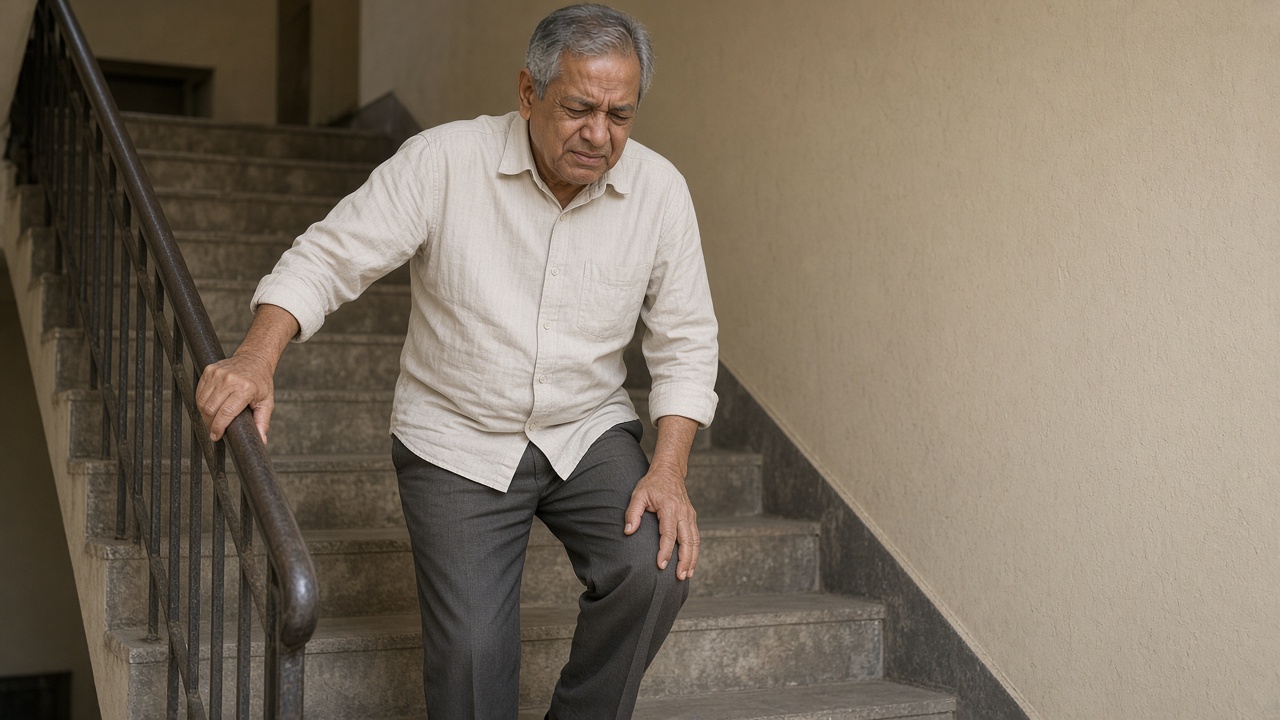
Can I treat knee pain without replacement?
Selected knee problems, including arthritis and meniscus-related pain, can be treated without a first jump to replacement. PRP and ozone injections are non-surgical options discussed after examination.
If the knee still hurts after surgery, that is a different situation. There is a dedicated page for pain after knee surgery.
How does this knee pain feel?
- Ache or swell after walking, stairs, or getting up from a chair.
- Stiffness in the morning or after sitting in a car or at a desk.
- You want to keep walking and delay replacement if a clinic option is still reasonable.
How is the knee assessed?
The visit looks at where the pain starts, how the joint moves, and what your reports show. Not every worn knee on an X-ray is the reason you cannot walk today.
PRP for pain needs accurate placement into the joint by a trained pain physician.
What have you already tried?
- Painkillers, gels, and a knee cap.
- Physiotherapy that helps until you walk farther again.
- Advice that the only remaining option is replacement.
What is PRP for the knee?
Alongside injections
- Avoid the walks or stairs that sharply increase the pain, without complete rest for weeks.
- Strengthen in angles that are not painful, such as seated work with ankle weights when walking hurts.
Clinic procedures discussed
- PRP (Platelet Rich Plasma): your blood is processed to concentrate platelets, then injected at the pain site.
- Ozone injections for selected knee problems, including arthritis and meniscus-related pain.
What is a PRP visit like?
- Local anaesthetic preparation.
- A blood draw, then centrifugation to concentrate platelets.
- Injection at the pain site, then discharge after the procedure.
Preparation takes approximately 30 minutes. The injection itself is brief.
Frequently asked questions
- Can PRP replace knee replacement?
- No. PRP is for selected knee problems, including arthritis and meniscus-related pain, when a non-surgical option is still reasonable. Replacement remains the right path for some people.
- My knee still hurts after surgery. Is this the same page?
- No. Use the dedicated page for knee pain after surgery. The joint can be structurally fine and still have a treatable pain source.
- How long is a PRP visit?
- Preparation takes about 30 minutes. The injection is brief. You are discharged after the procedure.
- How many PRP sessions will I need?
- That is decided after examination. Preparation takes about 30 minutes. The injection is brief. A webpage cannot fix the number of sittings.
PRP and ozone are for selected knee problems. Some people still need a surgeon. The first visit is to see whether a non-surgical option still fits.
Reviewed by Dr. Nitish Mandal, MBBS, MD, FIPM, TIPM (Nashville). Clinics: Koramangala and J.P. Nagar.
Page chat
Ask about knee pain
The questions on this page, with answers taken from the same details shown above.
Chat
Pain clinic
Typically replies on WhatsApp
I do not want knee replacement yet. What else is there?
PRP and ozone injections are listed for selected arthritis and meniscus-related pain. Replacement remains the right path for some people.
My knee still hurts after surgery. Same page?
Use the dedicated page for knee pain after surgery.